

Rachel Rofe has become a well-known name in the print on demand world, largely because of her Low Hanging System course. If you’re thinking about starting an ecommerce business without holding inventory, you’ve probably come across her training programs. But with so many online courses promising success, it’s fair to wonder if Rachel Rofe is legit and whether her methods actually work.

Rachel Rofe has a trust score of 4.7/5 based on independent analysis, and she teaches a print on demand business model through her Low Hanging System course that helps people sell custom products on platforms like Amazon and Etsy. She’s been in the ecommerce space for years and has built a reputation around making print on demand accessible to beginners. Her approach focuses on finding simple products and designs that can generate sales without requiring complicated marketing or large upfront investments.
This review will walk you through who Rachel Rofe is, how her Low Hanging System works, what the print on demand business model really involves, and whether her course is worth your time and money. You’ll also learn about the actual costs, competition challenges, and what other students have experienced with her training.
Background on Rachel Rofe

Rachel Rofe started her entrepreneurial journey as a child and has built multiple online businesses over the past two decades. Her work spans from early eBay selling to creating digital courses that teach others how to make money online.
Professional Journey and Achievements
Rachel began her business career at just 8 years old. She would approach local businesses and offer to hand out their flyers at grocery stores for $25. She could also design custom flyers for a bit more money.
Her online journey started in 1997 when she discovered eBay. She quickly became an eBay PowerSeller by buying items from thrift stores and reselling them for profit. During this time, she also worked at Walmart, climbing from cashier to Assistant Manager.
In 2006, Rachel quit her traditional job to focus on online businesses full-time. She has since created several courses including the Low Hanging System and the Quick Audience Profit System. These courses teach print-on-demand and affiliate marketing strategies.
Rachel developed the Low Hanging System with her boyfriend, Don Wilson. The course focuses on helping people create passive income through online selling.
Media Features and Public Presence
Rachel’s website claims she has been featured in major media outlets like Entrepreneur, Huffington Post, Fox News, and CNN. However, some reviewers suggest these may have been paid placements rather than editorial features.
She maintains an active online presence through her courses and training programs. Many students share their experiences with her teaching methods, though results vary from person to person.
Independent analysis shows Rachel has a trust score of 4.7 out of 5. Her scam score rates at just 1 out of 5, suggesting she runs legitimate businesses.
Rachel Rofe Net Worth and Income Streams
One widely cited claim states that Rachel generated $6 million in revenue over three years selling print-on-demand products online. This figure represents revenue, not profit, which is an important distinction when evaluating financial success.
Rachel’s income comes from multiple sources. Her main revenue streams include:
- Course sales (Low Hanging System, Quick Audience Profit System, Viral Buyer’s System)
- Print-on-demand product sales
- Affiliate marketing commissions
- Digital product creation
Her exact net worth remains unverified through public records. When you see income claims related to Rachel Rofe or her students, you should verify them independently before making purchasing decisions.
Understanding the Low Hanging System
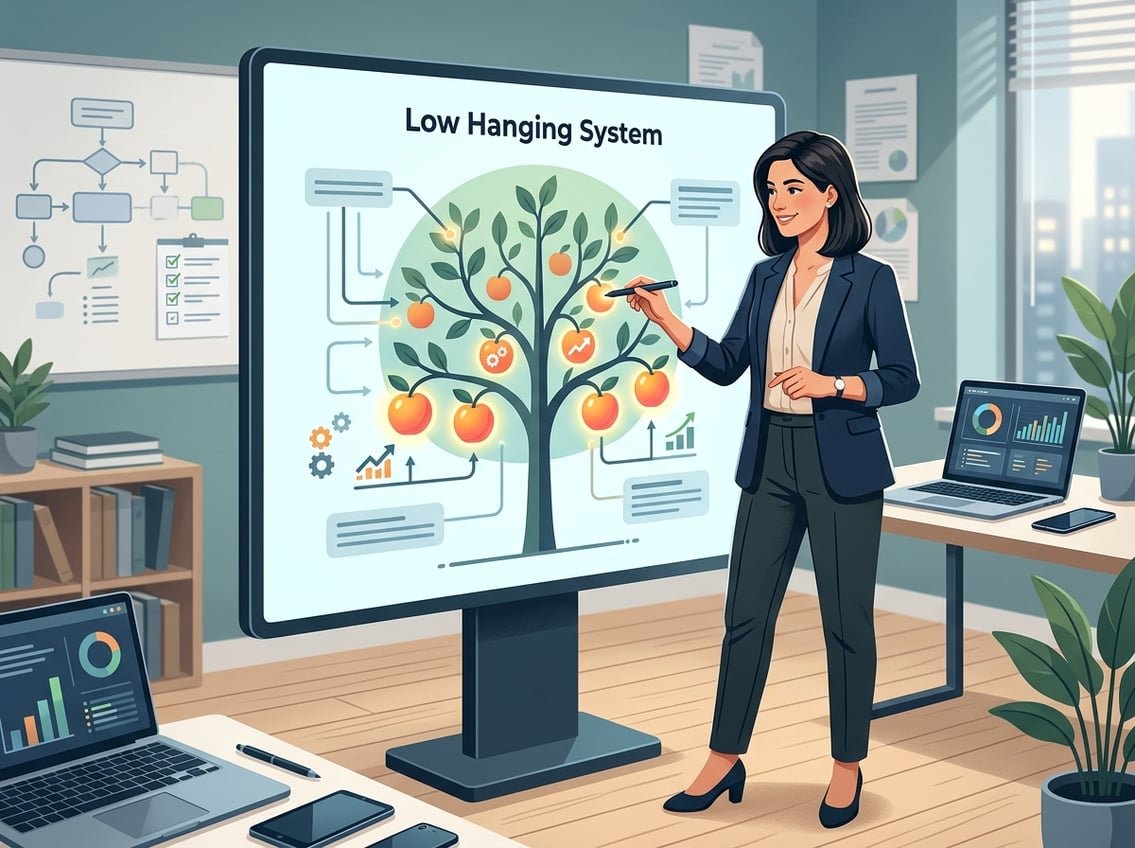
The Low Hanging System is a print on demand course that walks you through building a POD business using platforms like Amazon, Etsy, and eBay. The course focuses on selling custom-designed products without holding inventory, with GearBubble handling fulfillment.
Course Overview and Structure
The Low Hanging System breaks down the print on demand business into seven straightforward steps. You start by choosing a profitable niche using tools like SpotWins and SpotNiches software. Then you find engaging quotes and phrases to put on your products.
Step three involves setting up your GearBubble account, which handles the printing and shipping of your items. You’ll learn keyword research to help your products show up in search results. The course then guides you through creating an Amazon Seller Account and listing your products.
You’ll also learn how to expand to other platforms like Etsy and eBay to reach more customers. The final step covers how GearBubble fulfills your orders automatically. This structure aims to simplify what can seem like a complicated process for beginners looking to generate side income.
Key Features and Tools Provided
When you purchase the course for $1,491, you get access to several software tools and resources. The SpotNiches and SpotWins software help you find profitable niches and successful product ideas without starting from scratch.
You receive 100 done-for-you designs to get started quickly. The course includes a Design Forecaster tool that provides data on when to launch products. You also get 180 free mugs (five boxes of 36 each) to jumpstart your business.
The Holiday Success Blueprint helps you maximize sales during peak seasons. An inventory management feature lets you track your sales and orders easily. The Low Hanging System Jumpstart upsell costs an additional $1,997 and includes extra training courses, templates, and weekly live webinars where you can ask questions.
Target Audience and Who Benefits Most
This print on demand course targets people who want to start an online business without holding physical inventory. You don’t need prior experience in eCommerce or design skills to get started.
The course works best for people who have money to invest upfront and can dedicate time to learning the system. You’ll need a budget for the course itself, plus additional funds for advertising and monthly platform fees. People looking for true passive income might be disappointed, as running a successful POD business requires ongoing effort to handle customer service, manage listings, and respond to issues.
The Low Hanging System suits you if you’re willing to compete in a crowded market and can commit to marketing your products consistently. It’s not ideal if you expect quick profits or can’t afford the investment without a refund policy safety net.
Breakdown of the Print on Demand Business Model
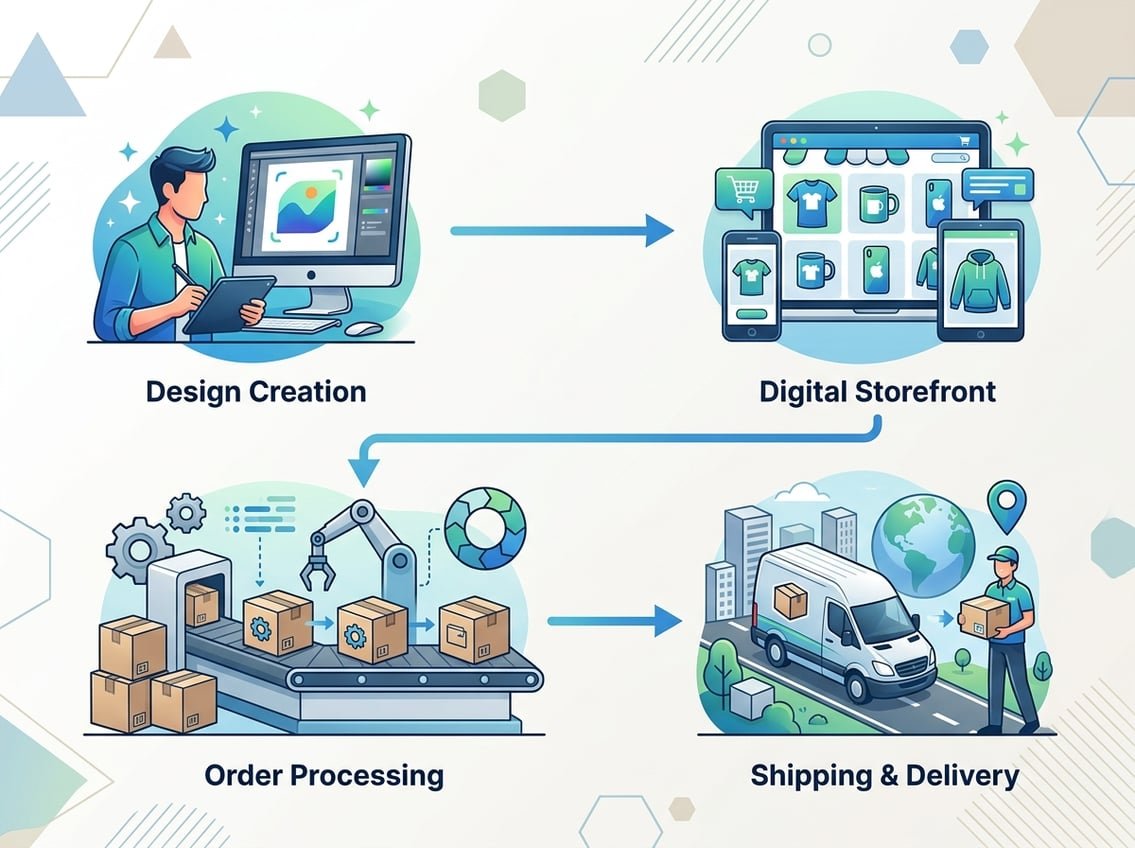
Print on demand lets you sell custom products without holding inventory or managing production yourself. The model connects your designs with printing companies who handle manufacturing and shipping, making it an accessible entry point for starting an ecommerce business.
How Print on Demand Works
The print on demand business works through a straightforward process. You create designs for products like t-shirts, mugs, or phone cases. Then you upload these designs to a POD platform that handles the printing.
When a customer orders from your store, the POD company receives the order automatically. They print your design on the product and ship it directly to your customer. You never touch the physical inventory.
Your profit comes from the difference between what you charge customers and what the POD company charges you. For example, if a mug costs you $8 to produce and ship, but you sell it for $20, you keep the $12 difference.
The main appeal of this online business model is the low startup cost. You don’t need to buy products upfront or rent warehouse space. You only pay for items after customers order them.
POD platforms like GearBubble and Printful connect your designs with production facilities. These platforms integrate with major marketplaces where customers shop.
You’ll need an Amazon Seller Account if you want to list products on Amazon. The platform charges fees for listings and takes a percentage of each sale. Integration costs can add up quickly across multiple platforms.
Other popular marketplaces include Etsy and eBay. Each platform has different rules, fees, and audience types. Etsy works well for creative and personalized items, while eBay serves bargain hunters.
The integration process links your POD account to these marketplaces. When someone buys your product, the order flows automatically to your POD provider. This automation saves time but requires proper setup to work smoothly.
Inventory Management and Fulfillment
Traditional inventory management doesn’t apply to POD since you don’t stock products. However, you still need to track which designs perform well and which don’t sell.
An inventory management feature helps you monitor sales data across platforms. You can see which products generate revenue and which ones waste your time. This data guides decisions about creating new designs or removing old ones.
Fulfillment happens automatically through your POD partner. They handle printing, packaging, and shipping to customers. You’re responsible for customer service issues like complaints or refund requests.
The hands-off fulfillment is convenient but comes with trade-offs. You can’t control print quality or shipping speed directly. If the POD company makes mistakes, your brand reputation suffers even though you didn’t create the problem.
Core Tools and Resources for Success

Rachel Rofe provides several specialized tools and training materials to help you build your print-on-demand business. The resources include research software for finding profitable products, technical platforms for creating stores, and courses that teach specific strategies.
SpotNiches, SpotWins, and Design Forecaster
SpotNiches is Rachel’s main keyword research tool for finding product ideas on Amazon and Etsy. You can search for trending items and get data on competition levels and sales potential. The tool helps you avoid oversaturated markets by showing you which niches still have room for new sellers.
SpotWins works alongside SpotNiches to analyze winning products. You can see what designs are already selling well and use that information to create your own versions. The software tracks bestsellers across different categories.
Design Forecaster is Rachel’s newest tool that predicts upcoming trends. It uses data to show you what types of products might become popular in the coming months. This gives you time to create designs before the market gets crowded. All three tools require separate subscriptions but they work together in Rachel’s teaching system.
GearBubble and Account Setup
GearBubble serves as your main platform for managing print-on-demand products across multiple marketplaces. You can connect your GearBubble account to Amazon, Etsy, and eBay to handle orders from one dashboard. The platform creates product mockups and syncs your inventory automatically.
Setting up your GearBubble account involves connecting payment processors and shipping integrations. Rachel provides step-by-step tutorials for linking your seller accounts on each marketplace. The platform charges monthly fees plus transaction costs for each order fulfilled. You’ll need active seller accounts on Amazon or Etsy before connecting them to GearBubble.
Supplementary Courses and Blueprints
Rachel offers several courses beyond her main programs. The Printable Profits course teaches you how to sell digital downloads instead of physical products. You create items like planners or wall art that customers download instantly.
The Proven Amazon Course focuses only on selling through Amazon’s marketplace. It covers specific strategies for Amazon’s search algorithm and advertising system. The Holiday Success Blueprint shows you how to prepare for seasonal sales periods like Christmas or Valentine’s Day.
Done-for-you designs are available through Rachel’s Design Club subscription. You get ready-made graphics each month that you can upload directly to your store. SaleHoo appears in some of Rachel’s resources as a supplier directory, though it’s less relevant for print-on-demand than for traditional dropshipping. The Ecommerce Accelerator bundles multiple courses together at a discounted price.
Realities of Competition and Profitability
The print-on-demand space has grown crowded as more people look to make money online through Rachel Rofe’s methods. Understanding the competitive landscape and realistic profit expectations helps you decide if this path fits your goals for passive income or side income.
Challenges Facing New Sellers
You’ll face significant competition when you start selling print-on-demand products. More sellers have entered the market thanks to courses like Low Hanging System, which means you’re competing against thousands of other designs.
The profit margins on POD products are typically low. When you sell a mug or t-shirt, you’re often making just a few dollars per sale after platform fees and production costs. This means you need high sales volume to generate meaningful income.
You’ll also need to budget for ongoing costs. Advertising expenses can eat into your profits quickly, especially when you’re just starting out. Platform fees from Amazon, Etsy, or eBay add up over time.
The idea of passive income sounds appealing, but you’ll still need to handle customer service. Returns, complaints, and order issues require your attention. This business model demands more active management than many people expect.
Niche and Keyword Research Strategies
Finding profitable niches requires time and research skills. You can’t just pick any phrase and expect sales. Low Hanging System includes tools like SpotNiches and SpotWins software to help with niche research, but you can also do this manually.
Keyword research determines whether your products get found on marketplaces. You need to understand search volume and competition levels for each term. Products that rank well on Amazon or Etsy typically target specific, less competitive keywords.
Your success depends on matching the right design to the right audience. Generic phrases face intense competition, while highly specific niches might not have enough buyers. You’ll need to test multiple approaches to find what works.
The software tools included in some packages can speed up your research process. However, these same tools are available to everyone else who takes the course, which means you’re all targeting similar opportunities.
Evaluating Profit Potential and Passive Income Claims
Making money with print-on-demand takes consistent effort and investment. The claims about passive income don’t match reality for most sellers. You’ll spend time creating designs, researching keywords, managing listings, and running ads.
Your actual earnings depend on multiple factors. Design quality, niche selection, marketing budget, and timing all affect your results. Most beginners don’t see significant profits in their first few months.
The upfront cost of $1,491 for Low Hanging System means you need substantial sales to break even. Add in advertising costs, software subscriptions, and platform fees, and your path to profitability gets longer.
This isn’t comparable to a digital rental property or digital leasing business where income becomes truly passive. You’re running an active e-commerce operation that requires ongoing attention and optimization.
Course Cost, Refund Policy, and Upsells
The Low Hanging System starts at $297, but additional packages can increase your total investment significantly. The refund policy isn’t a standard money-back guarantee, and you’ll need to review the terms carefully before purchasing.
Low Hanging System Cost Overview
The Low Hanging System cost is $297 as a one-time payment. This gives you access to Rachel Rofe’s main print-on-demand training program. The course covers how to find products, create designs, and sell on platforms like Amazon.
You don’t need to pay monthly fees for the basic course. However, the initial price only includes the core training materials and access to the private community.
Refunds and Customer Experience
The refund policy for the Low Hanging System isn’t straightforward. You won’t find a simple 30-day or 60-day money-back guarantee like other courses offer. The terms are more complex and require careful review.
Before you buy, make sure you understand what’s covered under refunds. Some students report difficulty getting refunds if they’re unhappy with the course. You should verify the current refund terms directly before making your purchase.
Upsells: Jumpstart and Additional Features
The Low Hanging System Jumpstart package costs $1,997. This upsell adds extra training modules, design templates, and weekly live webinars with Rachel Rofe. You also get access to the Holiday Success Blueprint, which teaches seasonal strategies.
The Jumpstart package doesn’t include one-on-one coaching despite the higher price. You’ll still rely on the community and group webinars for support. Other upsells may be offered during checkout or after you join the program.
Your total investment could reach over $2,000 if you purchase all the upsells. Consider whether you need these extra features or if the base course at $297 is enough to get started.
Alternatives and Complementary Opportunities
While print-on-demand offers one path to online income, several other business models provide different risk-reward profiles and income potential. Local lead generation, Amazon FBA, and dropshipping each have distinct advantages worth considering before committing to any single approach.
Exploring Other Online Business Models
Local lead generation (also called digital leasing or digital rental property) involves building websites that rank in Google for local service searches. You create these sites, get them to rank for terms like “plumber in Miami,” and rent the leads to local businesses. The startup costs are lower than print-on-demand, and you’re not dealing with physical products or customer service issues.
Unlike POD, where you compete with thousands of similar designs, local lead gen gives you specific geographic territories. Once a site ranks, it can generate passive income for months or years with minimal maintenance.
The learning curve focuses on SEO and website building rather than product design and marketing. Your main expenses are domain names and hosting, typically under $100 per site.
Comparisons: Amazon FBA, Local Lead Generation & Dropshipping
Amazon FBA requires you to buy inventory upfront and ship it to Amazon’s warehouses. This means higher initial costs than print-on-demand but potentially better profit margins. You control product quality and can build a real brand.
Dropshipping is similar to print-on-demand but covers all product types. A dropshipping course teaches you to list products from suppliers without holding inventory. The main difference is you’re not creating custom designs.
Local lead gen stands apart because you’re selling services, not products. You don’t deal with inventory, shipping, or customer complaints about product quality. Your clients pay you monthly for leads, creating predictable recurring revenue.
| Business Model | Startup Cost | Inventory Required | Monthly Income Potential |
|---|---|---|---|
| Print-on-Demand | $1,500+ | No | $500-$2,000 |
| Amazon FBA | $2,000-$5,000 | Yes | $1,000-$5,000+ |
| Dropshipping | $500-$1,500 | No | $500-$3,000 |
| Local Lead Gen | $500-$1,000 | No | $500-$3,000 per site |
Community Feedback and Expert Perspectives
Student experiences with Rachel Rofe’s programs show mixed results, while independent reviewers point to specific concerns about competition and outdated content. Many people who joined the Low Hanging System report struggles with making sales and getting banned from major platforms.
Self-Paced Reviews and Success Stories
You’ll find that Rachel Rofe reviews reveal a divided community. In the Low Hanging System Facebook group with thousands of members, many students struggle to sell their products. Some users report getting kicked off Amazon and eBay for policy violations.
One user on Quora shared that she had to sell over 500 mugs just to make back her initial investment. Another person on Trustpilot mentioned hidden costs like shipping and handling fees that weren’t clear upfront. She was charged before making any money from sales.
The program doesn’t offer a money-back guarantee, which leaves frustrated students without options. You won’t find many success stories from the silent majority who might be doing well. Most vocal feedback comes from people who didn’t have good experiences with the course.
Expert Opinions and Independent Reviews
Independent Low Hanging ecom reviews consistently point out the same issues. Experts note that the Print-On-Demand market has become highly competitive, making it harder for new sellers to break through. The training content appears to be outdated, with strategies you could find through free Google searches.
Multiple reviewers highlight that the $1,491 price tag (plus a $1,997 upsell) doesn’t match the value provided. The course lacks one-on-one coaching support, offering only group webinars for questions.
Experts also warn about the steep learning curve. While Rachel Rofe has real experience in the industry, her program doesn’t stand out from other POD courses available. Several review sites classify the Low Hanging System as “legitimate but not recommended” due to better alternatives in the market.
Frequently Asked Questions
Rachel Rofe’s programs raise common questions about costs, requirements, and what’s actually included. Here’s what you need to know before making a decision.
Is this program beginner-friendly, or do you need prior online business experience?
Rachel Rofe designs her programs for beginners. You don’t need previous experience selling online to start.
Her training includes step-by-step video instruction that walks you through each part of the process. Most of her students report being complete beginners when they joined.
The Quick Audience Profit System focuses on live selling through the Whatnot app, which doesn’t require you to show your face on camera. You can run shows using just your voice or hands while holding up products.
What’s included in the course, and how is the training delivered?
The training comes through video lessons that break down each step of the process. You get access to these videos immediately after joining.
Rachel’s programs typically include weekly coaching calls where you can ask questions and get help. Many of her courses also come with automation software or tools designed specifically for the business model being taught.
The Quick Audience Profit System teaches you how to source products, run live shows on Whatnot, and handle shipping. Full details about what’s included will be released when the program opens in July 2026.
How much does it cost, and are there any upsells or extra fees to expect?
The exact pricing for Quick Audience Profit System hasn’t been released yet. It will be announced when the program launches in July 2026.
Her other programs like Mini Income Streams have been priced at $2,497 or payment plans around $997 for three months. You should expect pricing in a similar range, though nothing is confirmed yet.
Rachel typically offers payment plans to make the cost more manageable. Watch for any upsells or VIP options that might come with additional features or tools.
How long does it typically take to see results if you follow the steps consistently?
Results vary widely depending on how consistently you show up and run live shows. This isn’t a passive income model, and it requires regular effort.
Some sellers report making their first sales within their first few shows. Others take weeks of consistent streaming before they build an audience and see regular sales.
The sellers who do best are the ones who commit to going live multiple times per week. Early shows tend to be smaller, and growth compounds over time as you build followers and learn what your audience wants.
Is there a refund policy, and what are the requirements to qualify for one?
Rachel Rofe typically offers money-back guarantees on her programs. The specific terms for Quick Audience Profit System will be announced when it launches.
Most of her refund policies require you to show proof that you followed the steps and put in the work. You usually can’t just ask for a refund without attempting the methods taught in the course.
Make sure you read the full refund terms before purchasing. Keep records of your work if you think you might need to request a refund.
What kind of support or community access do members get after joining?
Rachel’s programs usually include access to a private community where you can connect with other students. This gives you a place to ask questions and share what’s working.
Weekly coaching calls are a common feature in her training programs. These calls let you get direct feedback and answers to your specific questions.
You also get ongoing access to the training materials, so you can review lessons as many times as needed. The level of support varies by program, so check what’s specifically included in Quick Audience Profit System when details are released.