

Ippei Lead Generation is a course that teaches you how to build websites for local businesses, rank them on Google, and get paid for sending customer leads to those businesses. The program costs around $7,860 and focuses on a specific type of online business called local lead generation or “rank and rent” SEO. Ippei Kanehara and his business partner Dan Klein created this training to help you build passive income streams by connecting local service providers with customers who need their services.

The course teaches you how to create local service websites, get them to rank high in Google search results, and earn money by selling the leads to local businesses like plumbers, landscapers, and house painters. You’ll learn digital marketing skills including search engine optimization, paid advertising, and client outreach. The training includes about 30 hours of video lessons, weekly live coaching calls with Dan Klein, and access to a private community of other students.
Many students report getting real results from the program, though it requires significant time and effort to succeed. The course has both strong points and concerns you should know about before deciding if it’s right for you. This review covers what’s inside the training, how the business model works, what other students say about their experiences, and whether the high price tag is worth it for your situation.
Program Overview and Core Business Model
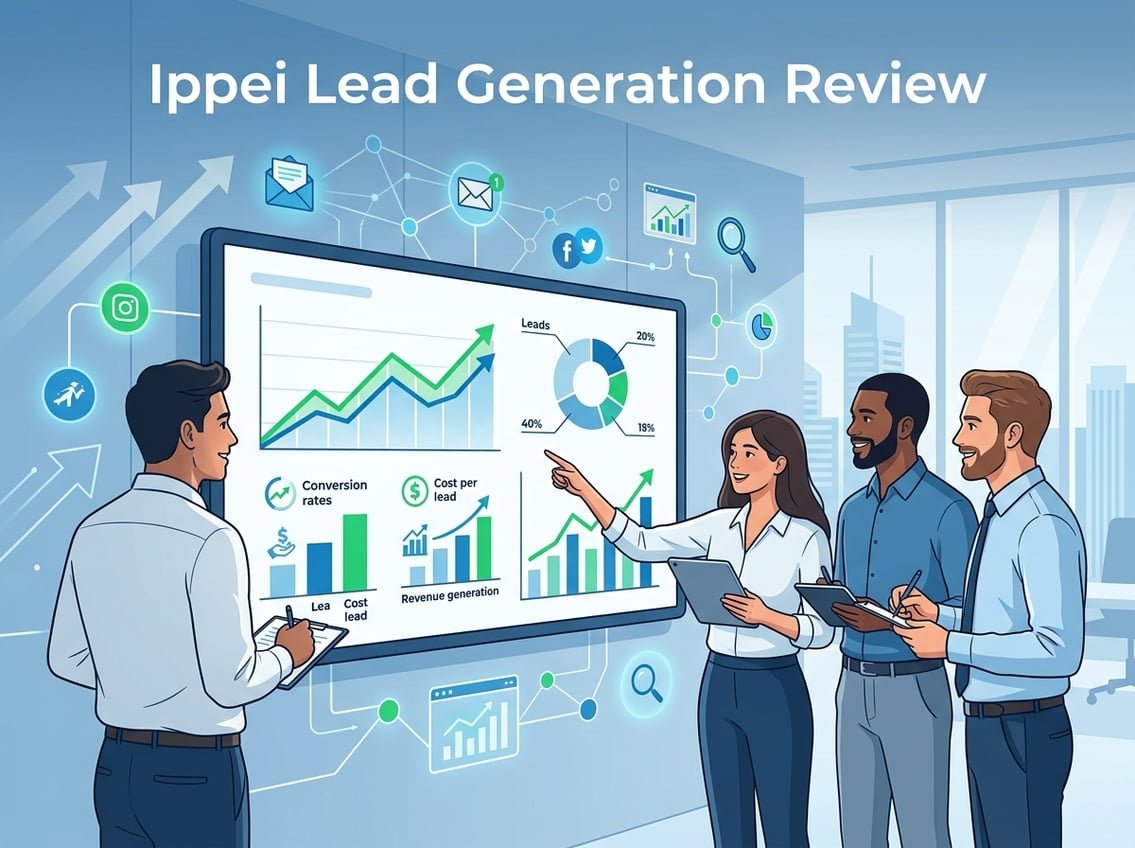
The Ippei lead generation program teaches you how to build digital rental properties that generate leads for local businesses. You create websites that rank on Google, collect customer inquiries, and rent those leads to business owners for monthly payments.
How the Rank and Rent Method Works
You start by picking a city and service niche where local businesses struggle to get customers online. The digital real estate approach means you build a simple website targeting searches like “plumber in Austin” or “tree service Chicago.”
Your job is to get that site ranked on the first page of Google. You do this through SEO work like creating content, building backlinks, and optimizing your Google Maps listing. Once your site ranks, it starts collecting phone calls and contact forms from people looking for that service.
Here’s where rank and rent differs from traditional SEO:
- You own the website, not the client
- You can switch clients if someone stops paying
- You send leads to the business owner after proving they work
- You negotiate pricing after showing real results
The local lead gen model gives you control because you built and ranked the site yourself. If a business owner cancels, you can offer those same leads to their competitor down the street.
Who This Model Is For
This business model works best if you’re willing to learn SEO and put in work upfront. You don’t need previous experience, but you need patience because ranking a site can take 6 to 12 months.
The lead generation business model fits people who want to build assets that pay them monthly. You’ll spend time learning how to build websites, research keywords, and understand what makes Google rank pages higher. If you hate technical work or want money immediately, this probably isn’t for you.
You should also be comfortable reaching out to local business owners. Part of the process involves cold calling or emailing to pitch your lead generation services once your site starts getting traffic.
Passive Versus Active Income Streams
The local lead generation business creates semi-passive income once your sites rank. You’ll do heavy work at the start building and ranking each site, but the ongoing maintenance is minimal.
After you land a client and set up the lead forwarding system, you earn monthly payments without daily involvement. Your ranked site keeps generating leads on autopilot. You might spend a few hours per month checking rankings and making small updates.
The income becomes more passive as you scale:
- First site requires the most learning and effort
- Sites 2-5 go faster with your improved skills
- After 10+ sites, you can outsource most tasks
- Monthly checks come in whether you work that day or not
This isn’t truly passive income like dividends from stocks. You need to maintain your sites and keep clients happy. But compared to trading hours for dollars, the make money online potential through digital leasing offers much more freedom.
Ippei Kanehara and Dan Klein: Background and Approach

Ippei Kanehara started as a student before becoming a coach, while Dan Klein brought years of experience to their partnership. Together, they created a lead generation course that focuses on building and ranking simple websites for local businesses.
Ippei Kanehara’s Story and Online Ventures
Ippei Kanehara tested multiple online business models before finding success with local lead generation. He spent over a decade working in this space and claims to earn $52,000 per month from his portfolio of lead gen websites.
Before lead generation, Ippei tried Amazon FBA, dropshipping, and affiliate marketing. None of these gave him the results he wanted. He says local lead generation works better because you own the websites instead of relying on other platforms.
Ippei has been coaching students for more than seven years. He actively runs his own lead gen sites while teaching others. This hands-on experience means he updates his course based on what works now, not what worked years ago.
Dan Klein’s Influence and ‘Job Killing’
Dan Klein recruited Ippei years ago to help run the lead generation training program. He brought the original Job Killing system that became the foundation for the Ippei lead generation course.
The Job Killing name refers to building your own business instead of working a traditional job. Dan’s approach focuses on creating digital assets that generate passive income through local SEO and lead generation.
Dan’s experience gave the course structure and credibility. He had already tested the lead gen business model and knew what worked. His methods became the core training material that Ippei later helped expand.
How Their Partnership Shapes the Course
The Ippei lead generation course combines Dan Klein’s proven system with Ippei’s real-world results. You get Dan’s original framework plus Ippei’s updates based on current market conditions.
Ippei handles most of the coaching calls and student support. Dan provides the strategic backbone and business model foundation. This split lets you learn from both theory and active practice.
Their partnership also offers unique benefits. Ippei gives students access to leads from his own roofing client, which helps you start earning before building your own sites. Most lead gen courses don’t provide done-for-you client opportunities like this.
Training Content: Modules, Tools, and Methods

The Ippei program gives you a structured learning path that covers everything from building your first website to tracking phone calls from potential customers. You’ll work with WordPress platforms, learn proven local SEO tactics, and get access to tools that automate lead delivery to your clients.
Site Building and WordPress Setup
You start with WordPress as your main platform for creating lead generation sites. The training walks you through selecting domain hosting services and setting up your first site from scratch, even if you’ve never touched WordPress before.
The course recommends Thrive Theme Builder as the primary tool for designing your pages. You’ll learn to create an SEO-optimized website without needing coding skills. The templates provided help you build mobile-friendly sites that load quickly and convert visitors into leads.
Each module includes step-by-step videos showing exactly where to click and what settings to adjust. You’ll practice building multiple sites across different niches, which helps you understand what works for plumbers versus what works for lawyers. The training emphasizes creating simple, clean designs that rank well rather than fancy sites that impress but don’t convert.
Local SEO Strategies and Google My Business
Local search engine optimization forms the backbone of the entire system. You’ll focus heavily on Google My Business optimization and citation building to rank your sites in Google Maps results.
The program teaches you how to perform keyword research using both free and paid keyword research software. You’ll target location-specific search terms like “plumber in Dallas” rather than broad national keywords. Citation building gets significant attention, with guides showing you how to list your sites on 100+ directories consistently.
You learn to optimize for local search by matching your business name, address, and phone number across all platforms. The training covers how to verify Google My Business listings and manage reviews to boost rankings. You’ll also study competitor analysis methods to find gaps in your local market that you can fill quickly.
Call Tracking, Automation, and Lead Delivery
Call tracking software becomes essential once your sites start generating leads. The course shows you how to set up call trackers that record which keywords and pages produced each phone call, giving you data to prove ROI to clients.
You’ll integrate automated systems that capture form submissions and phone calls, then forward them directly to your clients in real-time. The training covers several call tracking options and explains the cost-benefit of different services. You learn to set up unique phone numbers for each site so you can track performance accurately.
Lead delivery automation means you’re not manually handling every inquiry. The system teaches you to configure email notifications and SMS alerts that keep clients informed without your constant involvement. This automation lets you scale to multiple sites without drowning in administrative work.
Mastermind Events and Community
Your enrollment includes access to a private Facebook group where thousands of other students share wins, troubleshoot problems, and partner on projects. The Facebook group stays active with daily posts and quick responses from experienced members.
Mastermind events happen several times per year in different US cities. These live events let you network face-to-face with other lead generation business owners and learn advanced strategies not covered in the basic modules. You’ll attend workshops on scaling, client retention, and new ranking techniques.
Regional meetups and regional events give you local connections in your area. Many students form partnerships at these gatherings, splitting workload and sharing leads in different cities. The community aspect provides accountability that keeps you moving forward when you hit obstacles in your business.
Lead Generation Tactics: SEO, Outreach, and Paid Traffic

Ippei’s program focuses primarily on search engine optimization to get free, organic leads through Google rankings. The course teaches you how to build backlinks and use link building tactics to compete in local markets, though it doesn’t heavily rely on paid ads like Facebook ads or Google PPC.
Ranking in Google and Link Building Tactics
Your main goal with the rank and rent model is to appear at the top of Google SERP for local service keywords. Ippei teaches you to optimize your websites for Google algorithms by targeting specific geographic areas and service types.
The program covers intentional backlink outreach to build domain authority. You’ll learn to acquire backlinks from local directories, chamber of commerce sites, and relevant industry pages. These links signal to Google that your site is trustworthy and relevant.
Link building tactics include creating citations on business listing sites and getting mentions from local news sites. You don’t need hundreds of backlinks to rank in local markets. Most students see results with 20-50 quality links pointing to their rank and rent websites.
The course teaches you to track your backlink profile using tools like Ahrefs. This helps you monitor which links are helping your rankings and identify opportunities to build more authority.
Paid Ads Versus Organic Methods
The rank-and-rent business model relies almost entirely on organic leads from search engine optimization. You’re not running Facebook ads or Google ads to generate traffic.
This saves you from ongoing ad costs that eat into profit margins. Once your site ranks, you get consistent organic leads without paying for each click. Your only recurring costs are hosting and occasional SEO maintenance.
Paid ads require constant budget and optimization. You stop paying, your leads stop coming. With organic rankings, your traffic continues even if you don’t touch the site for weeks.
Some students experiment with paid traffic to test markets quickly, but it’s not part of Ippei’s core strategy. The program is built around creating digital assets that generate passive income through free search traffic.
Backlink Strategies and PBNs
Ippei’s training includes both white hat and gray hat link building strategies. You’ll learn about private blog networks (PBNs), which are groups of websites used specifically to create backlinks to your money sites.
A private blog network gives you control over your link building. You can place links whenever you need to boost rankings without waiting for other site owners to respond to outreach. However, Google’s algorithms can penalize sites using low-quality PBNs.
The course teaches you how to build safer PBNs using expired domains with existing authority. You’ll learn to make these blogs look natural rather than obviously created for backlinks.
You’ll also learn traditional link building through guest posts, local sponsorships, and directory submissions. Mixing PBN backlinks with natural links creates a more balanced profile that’s less likely to trigger Google algorithm penalties.
Monetization, Client Acquisition, and Scaling
The Ippei Lead Generation program teaches you practical methods for turning ranked websites into steady income through local business partnerships. You’ll learn how to approach potential clients, set up payment structures that work long-term, and build systems that let your lead generation business run with minimal daily involvement.
Negotiating with Local Businesses
You’ll get access to proven email and phone scripts that help you close deals with local service providers like plumbers, contractors, and dentists. The training shows you how to position yourself as a valuable partner rather than just another vendor. You learn to demonstrate your lead quality upfront, often by sending sample leads before asking for payment.
The course covers cold outreach strategies specific to different niches. You’ll use email autoresponders to follow up automatically with prospects who don’t respond right away. Phone scripts help you handle common objections about cost or commitment.
Most students start by offering exclusive leads to one business per area. This makes your pitch stronger since the client won’t compete with others buying the same leads. You’ll learn to present case studies from your early wins to build trust faster.
Recurring Revenue and Pricing Models
The standard pricing model taught is monthly retainers between $500 and $2,000 per site. This creates predictable recurring revenue instead of one-time payments. Higher-value niches like legal services or medical practices command premium rates, while home services typically fall in the middle range.
You can choose between flat monthly fees or pay-per-lead structures. Most successful students prefer flat fees since they’re easier to manage and provide stable cash flow. The training includes calculators that help you price based on the average customer value in each niche.
Client retention focuses on delivering consistent lead volume. You’ll track metrics like calls per month and qualified appointments to prove ongoing value. This approach keeps clients paying for months or years without constant renegotiation.
Outsourcing and Automation
Once you’ve built your first few sites, the program teaches you how to hire virtual assistants for repetitive tasks like citation building and content updates. This lets you scale beyond 5-10 sites without working 60-hour weeks. Many students use outsourcing services from the Philippines or India to keep costs low.
Automation tools help with lead capture and delivery. You’ll set up email autoresponders that notify clients instantly when new leads come in. Call tracking systems record conversations and send transcripts automatically.
The training covers which tasks to keep in-house versus delegate. You handle client relationships and strategy while assistants manage technical maintenance. This model appears frequently in student success stories where people grow from solo operators to managing 20+ properties generating five-figure monthly income.
Comparisons, Alternatives, and Student Feedback
Lead generation differs from other online business models in structure and income potential. Understanding how it stacks up against popular options and what students actually achieve helps you make an informed decision.
How It Compares to Dropshipping and Amazon FBA
Lead generation requires no inventory or shipping, unlike dropshipping and Amazon FBA. With dropshipping, you handle customer service issues and compete on price with thin margins of 10-20%. Amazon FBA involves upfront product costs, storage fees, and intense competition that can tank your profits overnight.
The lead gen model lets you build digital assets once and collect monthly payments from local businesses. You’re not dealing with refunds, product returns, or Amazon’s changing policies. While Amazon FBA might need $3,000-$5,000 to start with inventory, lead gen sites cost under $500 to build.
Affiliate marketing shares similarities with lead generation. Both involve connecting buyers with sellers. The key difference is ownership: you own your lead gen sites and can sell them. Affiliate commissions stop when you stop promoting.
| Business Model | Startup Cost | Monthly Income | Asset Ownership |
|---|---|---|---|
| Lead Generation | $300-$500 | $500-$2,000 per site | Yes |
| Amazon FBA | $3,000-$5,000 | $1,000-$3,000 | No |
| Dropshipping | $500-$1,000 | $500-$2,000 | No |
| Affiliate Marketing | $100-$300 | $500-$5,000 | No |
Client Results and Real-World Success Stories
Student success stories show real people making money with this system. One member built a site for bathroom remodels Oklahoma and earned $1,800 monthly within 90 days. Another created a computer repairs California site generating $2,500 per month.
The grandrapidstree case study demonstrates ranking a tree service site in a competitive market. This student secured three clients paying $600 each monthly. Results typically appear within 3-6 months of consistent work.
Not everyone succeeds immediately. Some students take longer to see their first payment. The average reported income ranges from $2,000-$10,000 monthly after the initial setup period. These numbers come from community feedback and testimonials.
LinkedIn prospecting techniques taught in the course help you find clients faster. Students report closing deals with local business owners by demonstrating ranked sites they already built.
Community Access, Support, and Course Criticism
You get access to a private Facebook group with over 5,000 members. Weekly live calls let you ask questions directly. Other students share their wins and troubleshooting tips regularly.
Sean Kochel and similar trainers offer competing programs, but Ippei’s community stands out for active participation. Members respond within hours to questions about citations, ranking issues, or client negotiations.
Course criticism centers on the price point and time investment. Some reviews mention the $1,497-$4,997 cost feels steep for beginners. Others note that building your first site takes 20-40 hours of focused work.
The learning curve challenges people without technical skills. You need to understand basic WordPress, Google Maps optimization, and outreach. Support helps, but you’re responsible for implementation. A few students report struggling in highly competitive niches without upgrading to premium coaching.
Frequently Asked Questions
People considering the Ippei Lead Generation program usually have similar questions about costs, what they’ll learn, and how realistic the results are. Here’s what you need to know before signing up.
What exactly do you get inside the program, and how is it structured?
The program teaches you how to build websites that rank in local search results and generate leads for small businesses. You learn the full process from picking a niche to building sites to finding clients who will pay you for those leads.
The course includes step-by-step video lessons that walk you through each part of the business model. You get access to templates, guides, and systems that show you how to set up your lead generation sites.
Weekly live coaching calls with Ippei and Dan give you a chance to ask questions and get feedback on your progress. There’s also a private student community where you can connect with other people learning the same business model.
How much does it cost, and are there any extra tools or fees to budget for?
The coaching program costs between $5,000 and $10,000 depending on which package you choose. This is a one-time payment for access to the training and support.
Beyond the course fee, you’ll need to budget for tools and services to run your business. You’ll need to pay for domain names, website hosting, and potentially some SEO tools to help you rank your sites.
Most students spend a few hundred dollars getting their first sites up and running. These costs are normal for any online business, but they’re important to plan for beyond just the course price.
Is this a good fit for complete beginners with no marketing or sales experience?
The program is designed for people who are new to online business and lead generation. You don’t need prior experience with websites, SEO, or selling to get started.
The training walks you through each step without assuming you know technical terms or marketing concepts. Many students start with zero experience and learn as they go through the lessons.
That said, you do need to be willing to learn new skills and put in consistent work. The business model isn’t complicated, but it does require effort to build sites and reach out to potential clients.
How long does it usually take to land a first client, and what factors affect that timeline?
Most students take between two to three months to start generating leads and getting paid by local businesses. Some people move faster if they can dedicate more time each week to building their sites.
Your timeline depends on how quickly you can get your websites to rank in Google search results. Competitive niches or locations might take longer to rank than less crowded markets.
The time you spend learning the system and taking action matters too. Students who follow the training closely and stay consistent tend to see results faster than those who work on it sporadically.
What kind of support, coaching, and community access is included after you join?
You get access to weekly live coaching calls where you can ask Ippei and Dan questions directly. These calls help you troubleshoot problems and get advice specific to your situation.
The private student community lets you connect with other people building lead generation businesses. You can share wins, get feedback, and learn from what’s working for others in the group.
The program also includes done-for-you resources like scripts, pricing calculators, and standard operating procedures. These tools help you move faster without having to figure everything out from scratch.
Are the results and testimonials shown publicly something most people can realistically expect?
The business model itself is legitimate and proven to work when you follow the process correctly. Real students have built profitable lead generation businesses using what the program teaches.
However, your results depend on how much work you put in and how well you execute the strategies. Not everyone who joins will make the same amount of money or see results in the same timeframe.
Success stories often come from students who stayed committed for several months and worked through challenges. If you’re looking for quick money without effort, this probably won’t meet your expectations.